




Read this guide inEnglishEspañolFrançais
Exclusive Area Guide
Isla
Blanca
Twenty kilometres of empty white sand between the Caribbean and a lagoon, twenty five kilometres north of Cancún. A four lane boulevard is being built to it right now, the first stretch due this December, and a title dispute has frozen hundreds of parcels along the same corridor. Both facts belong on the same page.
Not an island.
A sandbar with the sea
on one side and a lagoon
on the other.
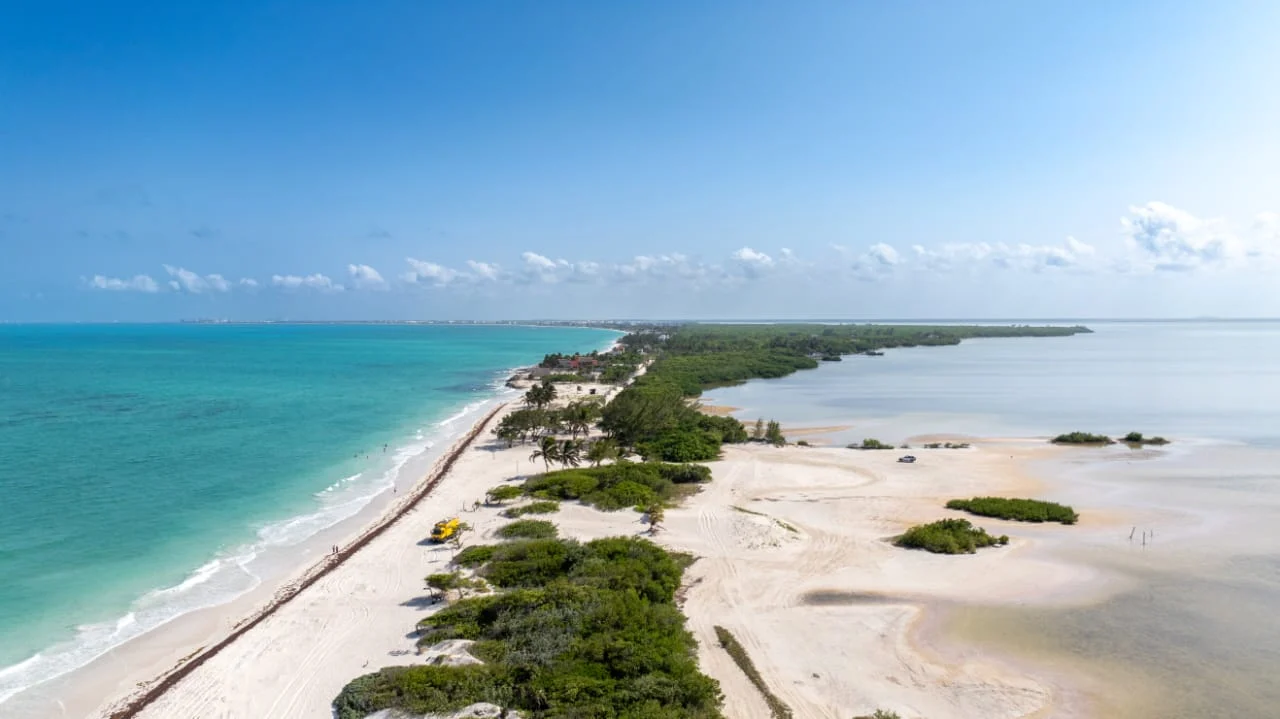
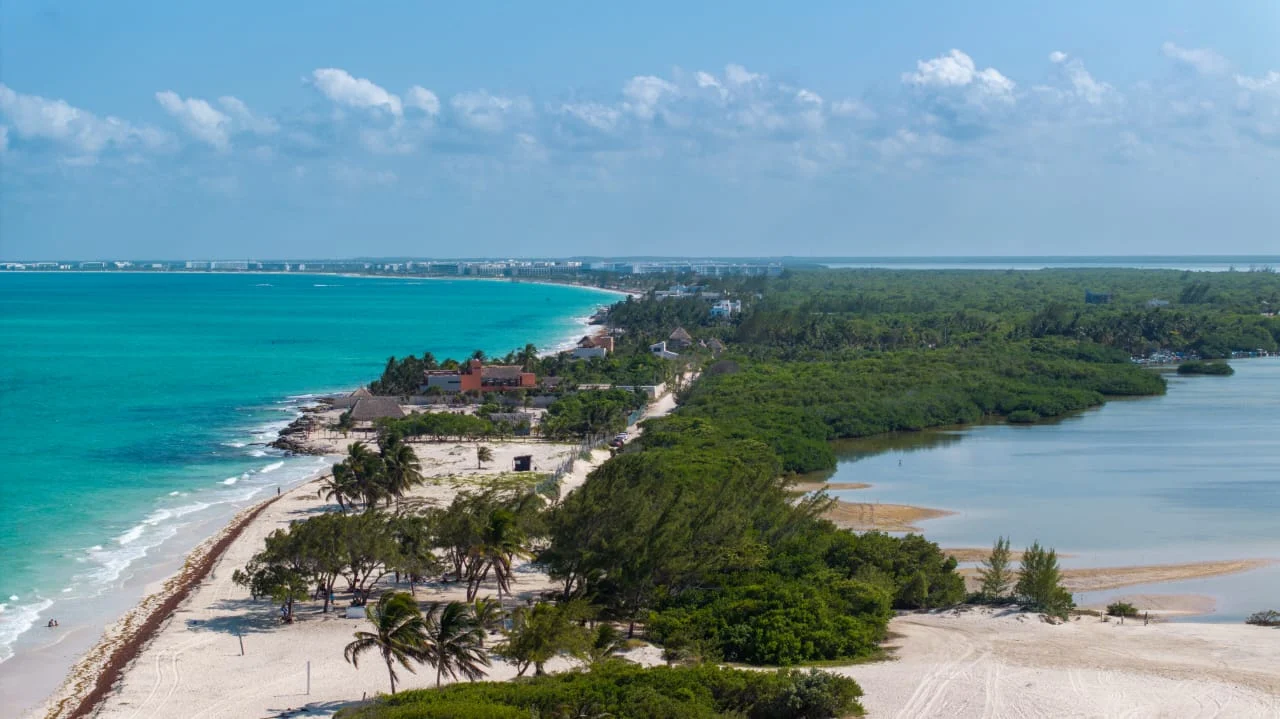
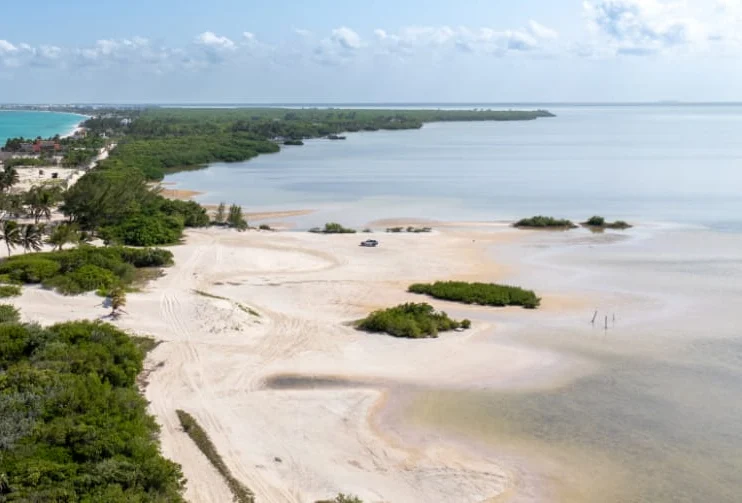
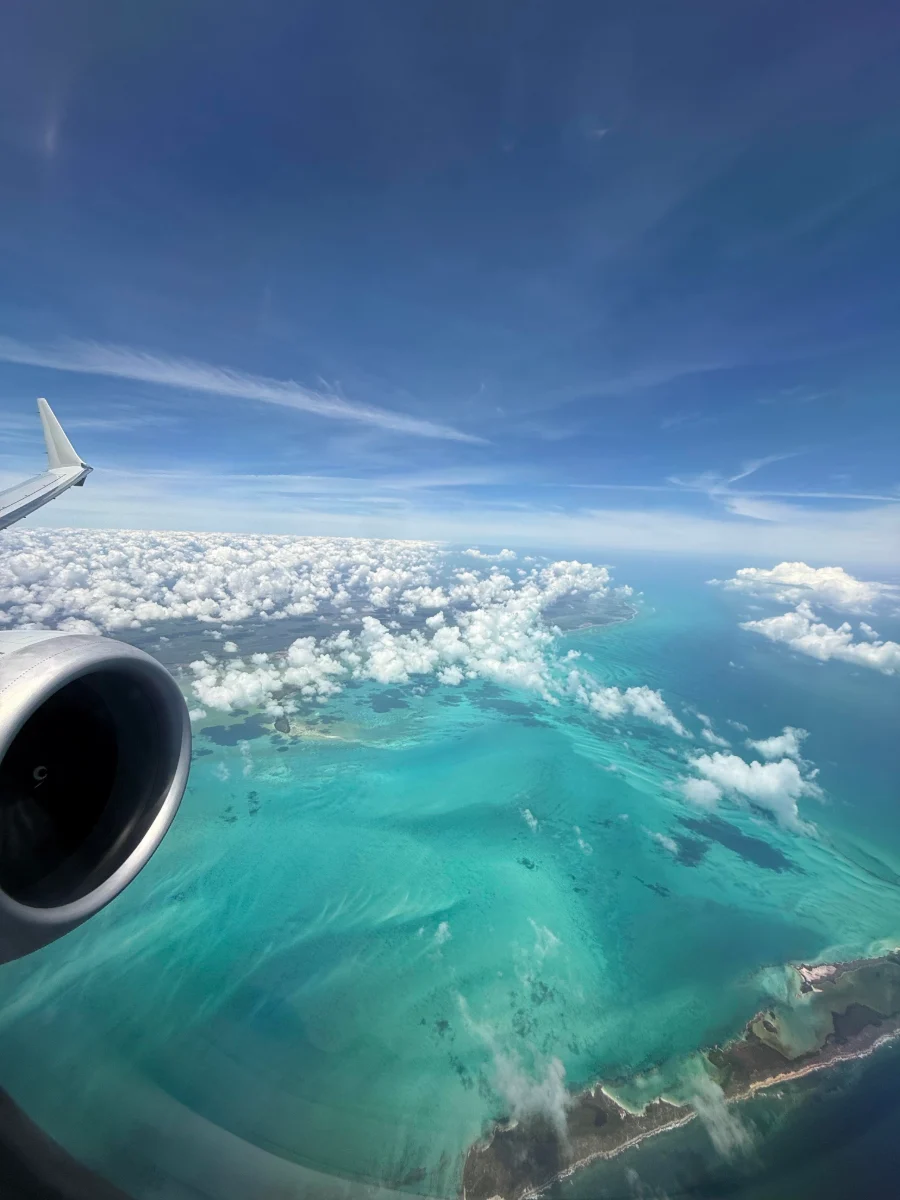
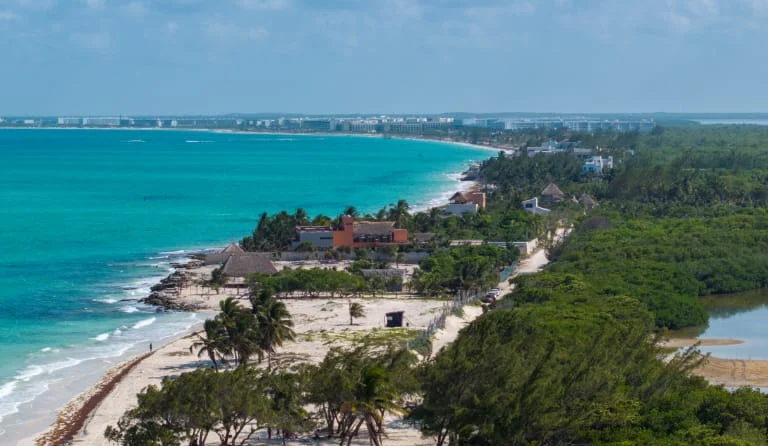
Isla Blanca is a strip of land roughly twenty kilometres long and in places only a few hundred metres wide, running north from Punta Sam to the mouth of the Chacmuchuc lagoon. The Caribbean is on your right, the lagoon on your left, and at the far tip the two bodies of water meet. It is inside the continental zone of the municipality of Isla Mujeres, not on the island itself, and you get there by car.
What makes it unusual is what is not there. No resorts on the strip, no shops, no beach clubs, no towers. White sand, mangrove, a handful of rustic camps and kite schools, and one road that turns to dirt before the end. Twenty five kilometres from downtown Cancún, roughly thirty to forty minutes with the current road surface.
It also gets far less sargassum than the coast south of Cancún, and that is geography rather than luck: Isla Mujeres and Isla Contoy sit offshore as natural barriers and break the currents that carry the weed in, and there is a reef line in front of the beach. Not immune, the hotels here still see some in high summer, but the difference against Tulum or Playa del Carmen in a bad year is stark, and if you have watched a rental lose a season to seaweed that one fact explains most of the investor interest in this strip.
Sea and lagoon
The Chacmuchuc lagoon runs the whole length behind the beach: shallow, flat, walkable, full of birds.
A world class kite spot
Ten miles of knee to waist deep flat water with consistent wind. One of the best in Mexico, and the reason people already come.
Clear water in a bad year
Far less sargassum than the coast south of Cancún, shielded by Isla Mujeres, Isla Contoy and the reef in front.
Still raw
Along most of the strip there is no mains water, no grid power, no drainage and no pavement. That is the trade.
The road is the whole story
Every investment argument for this coast rests on one public works project. Until now Isla Blanca has been cheap because it is hard to reach: two narrow lanes, no lighting, and a dirt final stretch. That is being rebuilt. Here is what is actually happening, in order.
Fonatur builds the Hotel Zone and the city expands south and west along Federal Highway 307. The land north of Punta Sam stays what it always was: sand, mangrove, coconut, a lagoon full of fish and birds, and a scattering of privately titled parcels with federal decrees behind them going back more than five decades.
The first serious development pushes north of Punta Sam: a gated master plan with a Greg Norman golf course, marina and all inclusive resorts, then Costa Mujeres beyond it, roughly 930 acres of controlled master plan with 26 kilometres of continuous beachfront running towards Punta Sam. Isla Blanca becomes the empty land immediately past the last hotel gate.
The federal and state governments announce a tourism corridor from Cancún to Isla Blanca: paving, a modern boulevard with bike lanes, bridges, medians and lighting along the coast and the hotel frontages. Executive design begins, with studies, rights of way, environmental permits, land use and urban development plan work.
Work begins on the first contract: 4.2 kilometres of the existing road in the continental zone of Isla Mujeres, between kilometre 7+000 and kilometre 11+200. Today that stretch is a carriageway of barely six metres. It becomes a boulevard with two lanes in each direction plus a bike lane and pavements, with earthworks, drainage, paving, complementary works and environmental mitigation. By early September it was 37 percent complete, and completion is set for December 2026.
The full corridor modernises 25 kilometres from Cancún to Isla Blanca, widening it from two lanes to four with a central median, bike lanes, pavements and street lighting. The state reports 380.9 million pesos across the sections in execution, more than 14,000 jobs, and design capacity for up to 22,000 vehicles a day. The first contract alone is projected at 1,320 direct and indirect jobs with an impact on around 22,600 residents.
Real estate analysts, business groups and the urban development authorities have publicly projected that capital flowing into tourism, commercial, residential and urban infrastructure over the next three years will lift values in the zone by up to 25 percent. Treat that as a projection, not a promise. What is verifiable today is that the road is funded and being built, and that the cadastral value of these parcels has risen every year regardless.
Investors and developers openly describe the Cancún to Isla Blanca corridor as the last great expansion frontier of the Mexican Caribbean, holding some of the highest value land in the country between consolidated hotel developments and future tourism projects. It is also where a land title conflict escalated in March 2026, which is the next section and the reason this page exists.
The part no listing
will tell you
This is the most important section on this page, and you will not find it in a developer brochure. If you are being offered land in the Cancún to Isla Blanca corridor, read it before you transfer a peso.
The state land authority, SEDETUS, issued official letters notifying the Public Registry of Property, the municipal cadastre and the notaries of Quintana Roo to abstain from processing movements on certain parcels in the corridor, on the presumption that they may be terrenos nacionales, national land.
- What that does in practice. Every registry entry, cadastral update, deed and act of ownership on the affected parcels stops. You cannot sell, you cannot subdivide, you cannot mortgage, and a notary cannot close.
- Who is affected. Around three hundred owners, Mexican and foreign, of the parcels known as Santa Fátima and Francisco Javier, between Costa Mujeres and Isla Blanca.
- What they hold. Public deeds duly recorded in the Public Registry, documented chains of title, federal decrees more than five decades old, decades of property tax receipts, cadastral records, municipal service billing and federal maritime zone concessions.
- What is missing on the other side. The owners state that as of today there is no formal declaration, no final administrative resolution, no court judgment, no reversion proceeding and no individual notification establishing that these parcels stopped being private property.
- Where it goes. It is being contested, and it is widely described as a test of legal certainty in Quintana Roo. Until it resolves, the affected parcels are frozen and the wider corridor carries a discount that reflects that risk.
The owners have been explicit that they are not against the corridor or the development. Their point is narrower and fairer: the growth should happen with respect for the property rights of people who legally hold land there, in an area that still lacks water, power, drainage and pavement while its cadastral value climbs every year.
How to buy here without getting hurt
Some parcels in this wider area are clean and transactable today. Others cannot legally be moved at all. The difference is not visible from the beach, from a fence line or from a WhatsApp listing, and it is not something a seller will volunteer. It is found in the file.
Verify the parcel, not the zone
The freeze applies to specific parcels, so a blanket answer about Isla Blanca is worthless.
- Current certificate of no liens from the Public Registry, dated this month
- Cadastral certificate and the cadastral map showing the exact polygon
- Full chain of title back to the original decree or grant
- Written confirmation that no SEDETUS restriction applies to that parcel
- Property tax receipts, ideally five years
Ask the notary before you agree a price
In this corridor the notary is not the last step, it is the first filter.
- Have a notary confirm they can actually close on that parcel today
- If a notary hesitates, that is your answer, not a delay
- Never accept a private contract as a substitute for a deed
- Never take possession, or fence, before the deed exists
Know what you are being sold
Several kinds of paper circulate here and only one of them is ownership.
- Titled private property, recorded and transactable
- Ejido land, which needs to be regularised before it can be sold to you
- Possession without title, sold cheaply and worth what that implies
- Federal maritime zone, which is a concession, never a purchase
- Parcels under the current presumption of national land
Price the missing services
The land is only part of the number on a raw coastal parcel.
- Well, cistern and treatment, or a connection cost when the mains arrive
- Solar and storage, or a generator, until the grid reaches you
- Access, since the last stretch is still unpaved in parts
- Environmental permits, and mangrove is protected federally
- Land use and density: much of the strip is tourist zoning, not housing
Set a realistic horizon
This is a land play with a construction timetable attached, not a move in purchase.
- Three to seven years is the honest window for the corridor to mature
- No rental income in the meantime unless you build
- Annual carrying cost is low: predial in Quintana Roo is a fraction of US or Canadian property tax
- Exit is to a developer or a later buyer, so title has to be immaculate
Where we will tell you no
We are a buyer’s brokerage, so this is the part of the job that earns the fee.
- If the parcel is under the presumption, we will say so and stop
- If the chain of title has a gap, we will not paper over it
- If the seller will not produce a current registry certificate, we walk
- If your horizon is under three years, we will point you at Costa Mujeres instead
General guidance from public sources as of September 2026, not legal advice. The status of any individual parcel has to be confirmed in writing by a notary and by current registry and cadastral searches, and it can change.
What people already
come here for
Isla Blanca is not undiscovered, it is undeveloped. There is an established weekend and sports culture on this strip already, and it tells you who the first residents and renters will be.
Kitesurfing
The reason the strip has a name outside Cancún. The lagoon is one of the best flat water spots in Mexico.
- Around ten miles of flat water, knee to waist deep, sandy bottom
- Average wind 12 to 25 knots, with Norte days of 25 to 35
- North winds blow onshore here when they are offshore everywhere else on the coast
- Safe for beginners: if you drift, you walk your kite back
- Schools and rental on site, and La Punta five minutes further for easterly days
Fishing
A serious fly fishing destination, not a boat trip add on.
- Bonefish, permit and tarpon on the flats
- Snook, macabí and palometa off the beach
- Wadeable water for most of the lagoon
- Guides operate out of Cancún and Isla Mujeres
Birds and mangrove
The lagoon side is an ecotourism asset in its own right, and a constraint on building.
- Herons, roseate spoonbills, pelicans, cormorants, ospreys and frigatebirds
- Mangrove that produces a pink orchid, and blue land crabs
- Shallow enough to swim and to walk
- Federally protected: mangrove is not something you clear
The beach day
What a Saturday looks like today, before any of it is built.
- Soft surf and shallow entry, safe for families
- Camping and picnics, no loungers to rent
- Sunset where the lagoon and the sea meet at the tip
- A few ceviche shacks serve the morning catch on the sand midweek
- Avoid Sundays, which is when Cancún comes
What is nearby
You are not as isolated as the dirt road makes it feel.
- El Meco, a Maya archaeological site, around 30 minutes away
- Puerto Juárez for the passenger ferry to Isla Mujeres, and Punta Sam for the car ferry
- Playa Mujeres for restaurants, the golf club and the marina
- Isla Contoy, a national park and bird sanctuary, offshore
- Cancún markets and the Hotel Zone, half an hour south
Go prepared
The single most useful section of this page if you are visiting before you buy.
- No public toilets, no ATMs, no shops: bring cash, water, food and shade
- Mobile signal drops as soon as the pavement ends, so download offline maps
- The last kilometre or so is unpaved, passable in a normal car, slow
- Long sleeves, real insect repellent and biodegradable sunscreen
- Take your rubbish out with you, there is no collection
- Weekdays are empty, weekends are not
Every hotel on this coast,
and why the list matters
Nobody builds twenty thousand rooms next to land that stays empty. This is the single best proof of where the corridor is going, so here is the full inventory on the twenty five kilometres between Punta Sam and Isla Blanca, south to north. One of them is actually on the strip; the rest are the reason the road is being widened.
On the Isla Blanca strip
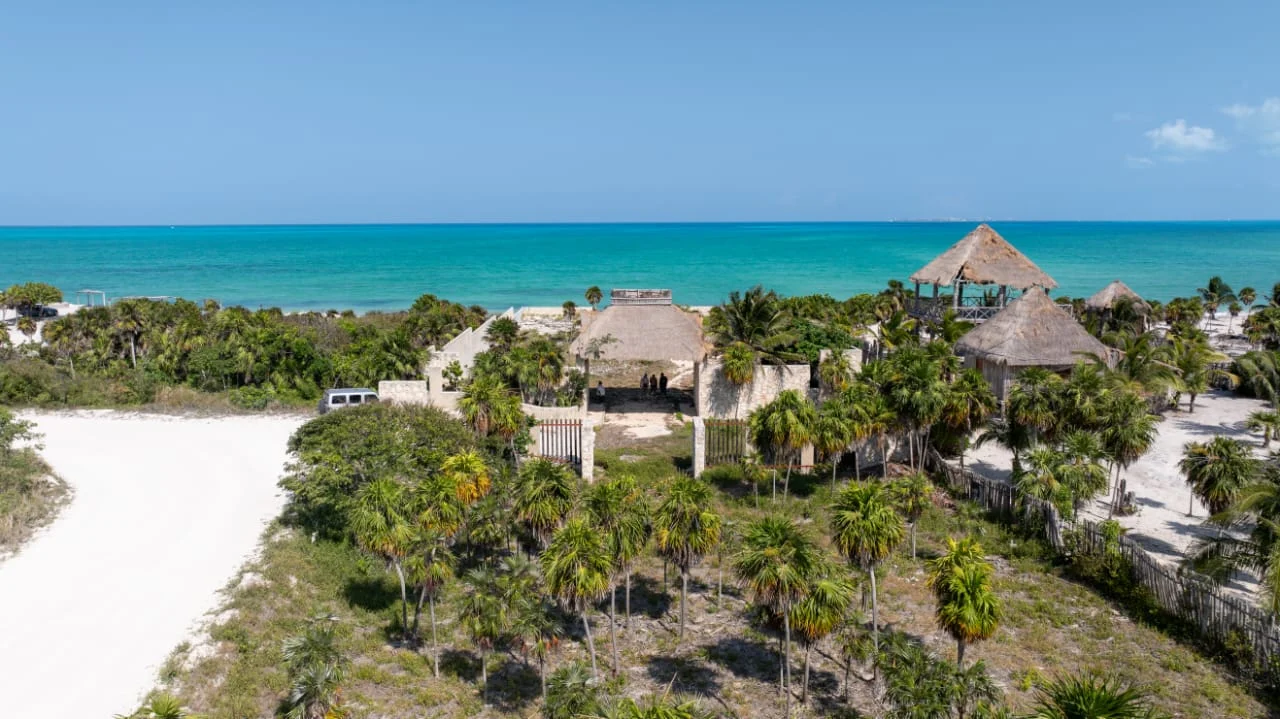
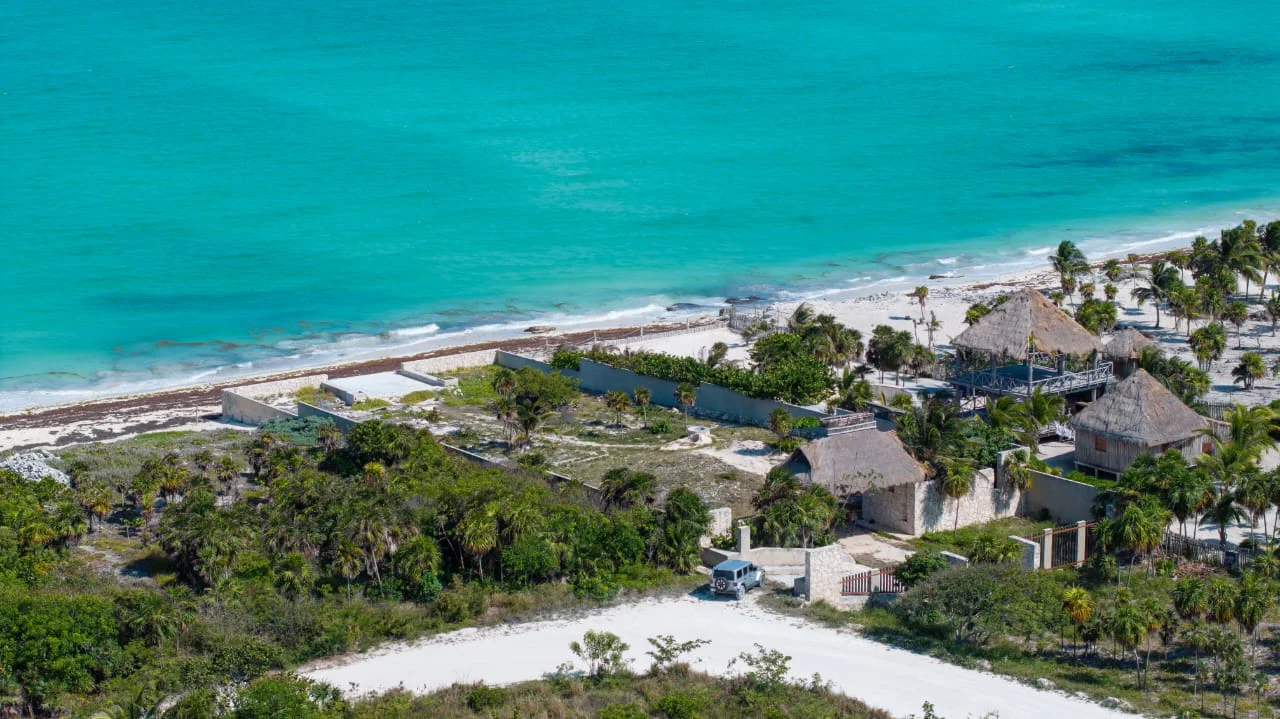
The only hotel actually past the last resort gate, and the easiest way to see the land before you buy it.
- Punta Blanca Eco-luxury Beach House
- Punta Blanca day pass
- Punta Blanca restaurant and spa
- Boutique, pet friendly, 35 minutes from the Hotel Zone
- Plus rustic beach camps and the Ikarus kite camp on the lagoon
Playa Mujeres, the gated enclave
Golf, a marina and the highest concentration of five star rooms north of Cancún.
Costa Mujeres, the newer stretch
The wave that arrived after Playa Mujeres, and the one still adding rooms today.
Read the list as a supply curve. Every one of these hotels arrived in the last fifteen years, in a place that had nothing, and each one pulled road, power, water and staff housing a little further north. Isla Blanca is the next parcel in that line, which is the argument, and it is also why the land is no longer cheap by accident.
The Rafa Nadal Tennis Center
is fifteen minutes south
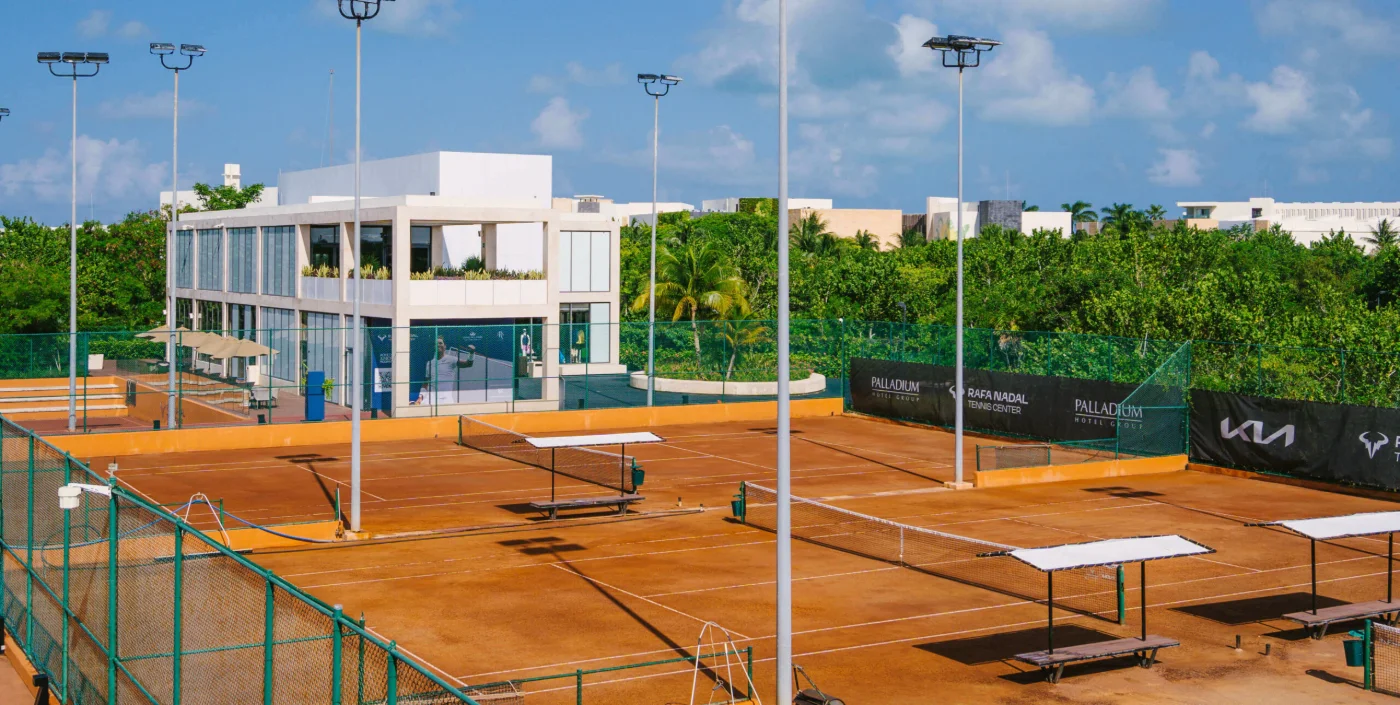
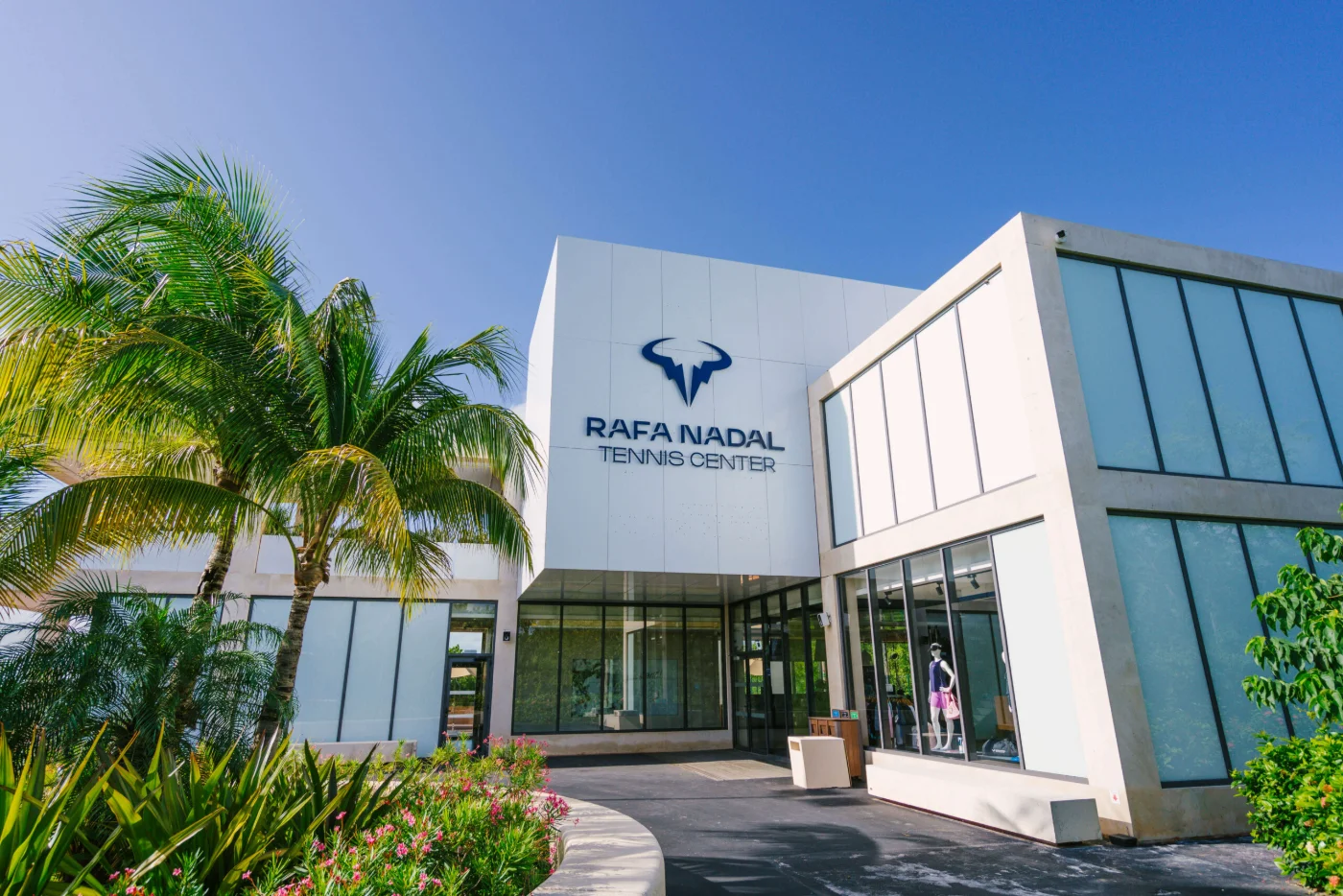
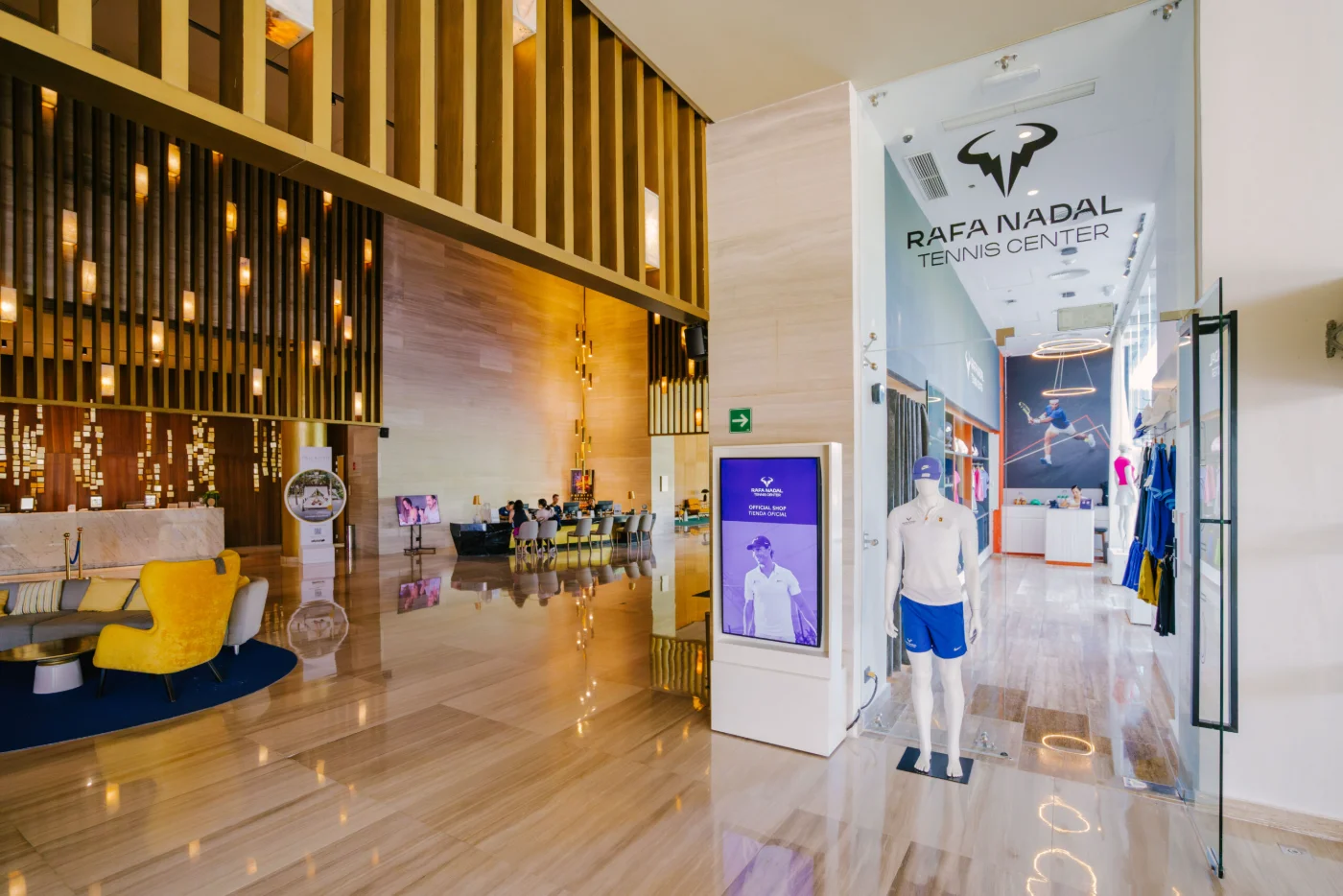
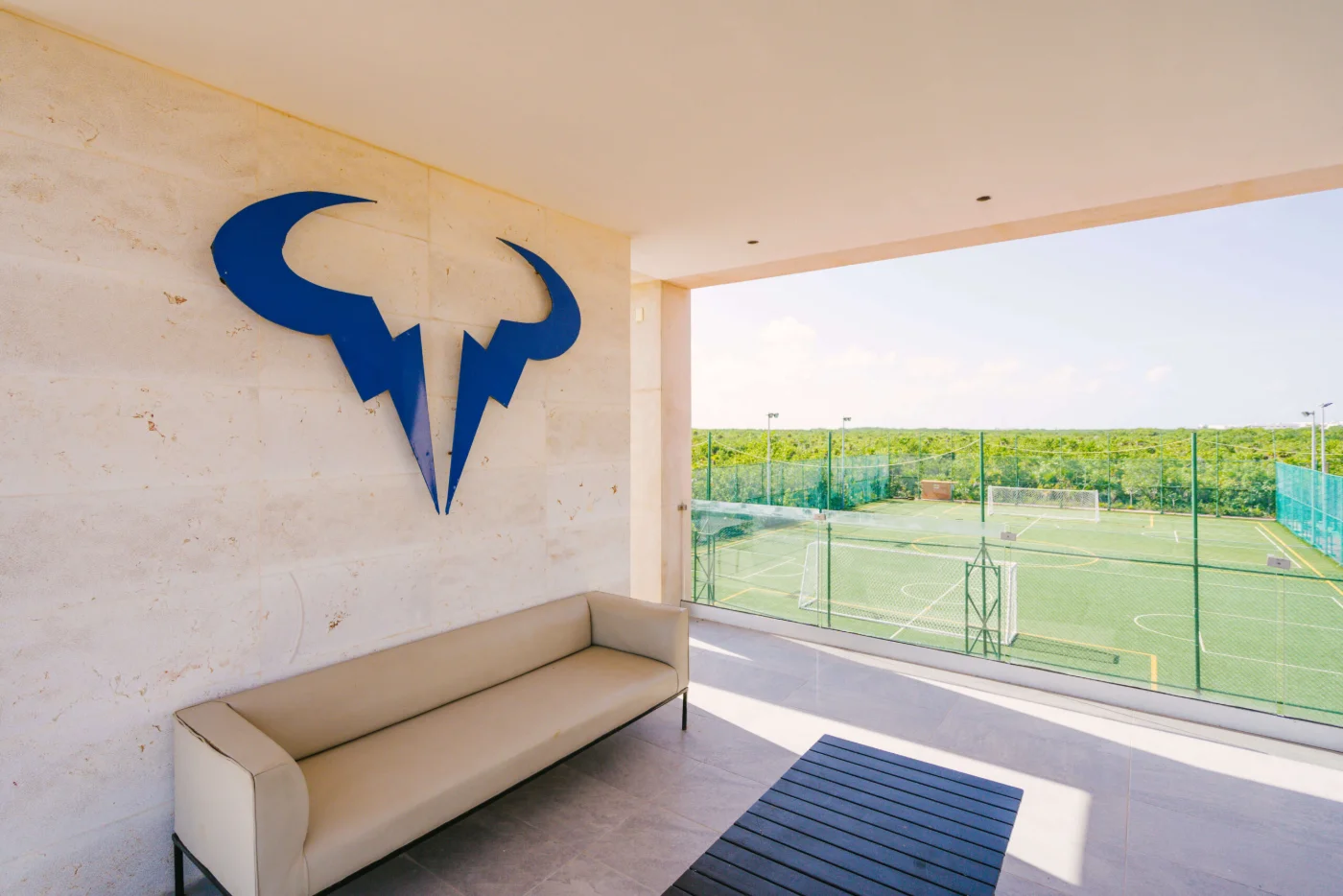
One amenity on this coast is worth its own paragraph, because it is the kind of thing that changes who rents and who buys. The Rafa Nadal Tennis Center sits inside Grand Palladium Costa Mujeres, on the same stretch of road, and it is the only facility of its kind in the Mexican Caribbean.
- Nine courts, hard and clay, plus a padel court and a multi sport pitch
- Coaching under the Rafa Nadal Academy methodology, from beginner to competition
- Open to guests and to visitors on a day or clinic basis
- Junior programmes, adult clinics and private lessons
- Gym, fitness studio and physio, run to academy standards
- Fifteen minutes from Isla Blanca, on the way in from Cancún
The four addresses
on the same road
Almost nobody who asks us about Isla Blanca ends up buying only Isla Blanca. They are choosing between four very different products on the same twenty five kilometres of coast, and the honest comparison is the useful part.
Isla Blanca
Raw land
Raw land, tourist zoning, no services, highest upside and highest risk.
- Beachfront and lagoon front parcels, plus macro parcels sold by the hectare
- No mains utilities and unpaved access on much of the strip
- Title has to be verified parcel by parcel
- Buyer profile: developer, land banker, three to seven year horizon
Costa Mujeres
Built and selling
The built version of the same coastline, and where most of our buyers actually close.
- A controlled master plan of roughly 930 acres with low building density
- Branded and independent condominiums, immediate delivery and pre sale
- Tickets running from around USD 235,000 up past USD 5 million
- AMPI Cancún has documented appreciation in the 8 to 12 percent range
- Buyer profile: rental income now, not land in five years
Playa Mujeres
Gated and turnkey
The gated golf and marina enclave immediately south, and the reason the road exists at all.
- Greg Norman golf course and a marina
- Villas and condominiums inside the gates
- All inclusive resorts operating alongside the residential
- Buyer profile: golf, security, turnkey
Isla Mujeres, the island
Island, capped supply
Same municipality, completely different market: an inventory that physically cannot grow.
- A seven kilometre island reached by ferry, twenty minutes from Cancún
- Punta Norte holds the top beachfront tickets, from around USD 1.5 million
- Zona Centro boutique condominiums and restored homes from around USD 400,000
- Sac Bajo and Garrafón, bay views, roughly USD 300,000 to 1.2 million
- Buyer profile: scarcity, high end vacation rental, walkable village life
The full hotel inventory for this coast, with links, is in section 05. Their presence is what funds the road, the drainage and eventually the utilities, which is exactly why the empty land beyond them is being priced the way it is.
What is actually
for sale here
Isla Blanca is a land market, not a housing market. There are no finished condominiums on the strip, and anything advertised as a home here is either just outside it or not yet built. The figures below are reference points from public inventory in 2026: they move with the parcel, the frontage, the title status and the exchange rate, and every one of them has to be verified before an offer.
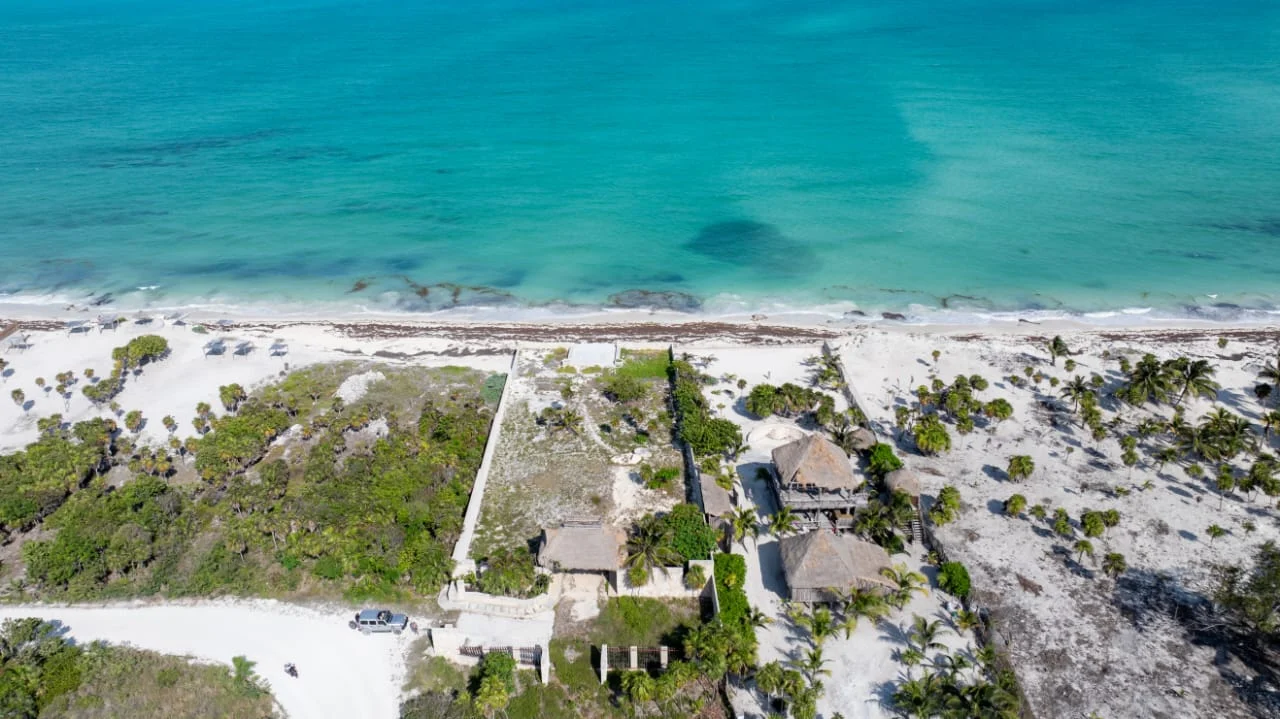
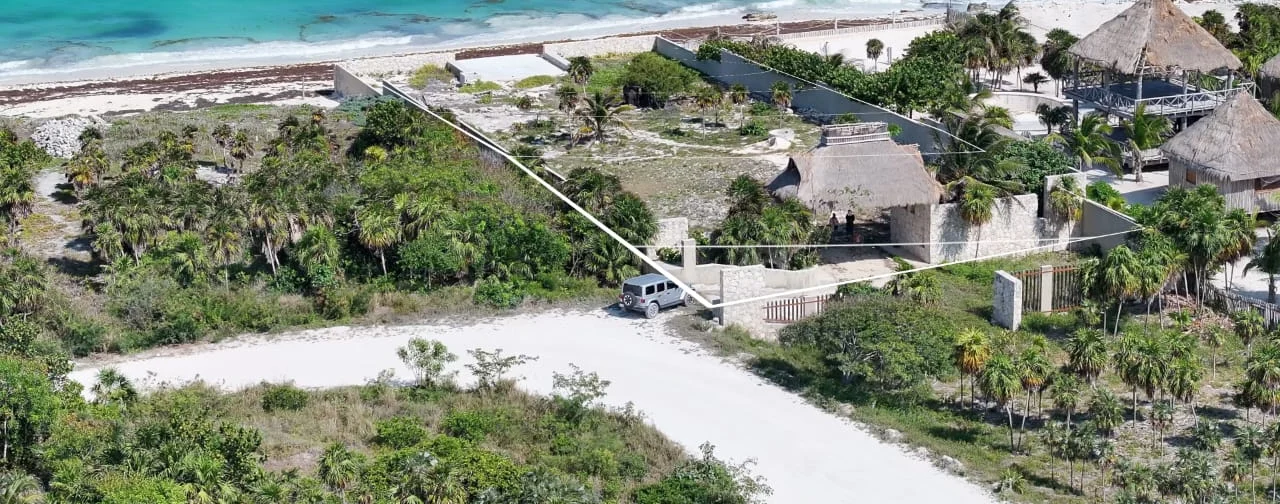
Small titled beachfront parcels are the scarcest product on the strip. A recent public listing showed 14,766 m² with 61 metres of white sand frontage at that figure, and there are much smaller parcels of 5,000 m² with 25 metre frontages. Zoning is typically tourist resort use with residential tourist as a compatible use, so read the density before you plan anything.
The institutional product: whole blocks of 74, 500 and even 2,500 hectares between the sea and the lagoon, some with a full kilometre of beach frontage, sold to developers and funds. Land use is hotel tourism or ecotourism. One 74 hectare parcel carries federal authorisation for a project of more than 2,000 rooms plus commercial, service and office space. These are the parcels the corridor was designed around.
The cheap end, and where the most care is needed. Small inland lots are advertised in pesos, cash, at prices that sound impossible for this coast. Some are legitimate and titled; others are possession, ejido or inside the presumption. The price is not the risk. The paper is.
If you want to own on this coast and earn from it this year, the answer is Costa Mujeres or Playa Mujeres rather than Isla Blanca: delivered and pre construction condominiums, branded and independent, up past USD 5 million, with rental programmes already running. Same beach, same road, a completely different risk profile.
Before you buy: the rules that change the numbers
ISABI here is 3 percent
Isla Blanca is in the municipality of Isla Mujeres, so the acquisition tax is 3 percent of the purchase price, lower than the 4 percent charged in Tulum and Playa del Carmen. Total closing costs still run roughly 7 to 10 percent.
A fideicomiso, even on land
The whole strip is inside the 50 kilometre restricted coastal zone, so a foreign buyer holds title through a renewable bank trust with an annual fee. It gives full use, rental, resale and inheritance rights, and it applies to raw land exactly as it applies to a condominium.
Zoning is tourist, not residential
Most of the strip is zoned for hotel tourism or ecotourism development, with residential tourist use as a compatible category and a stated minimum density. Buying a beach parcel does not automatically give you the right to build a house on it.
Mangrove is federal
The lagoon side is mangrove, and mangrove is protected under federal law. Environmental impact authorisation drives what you can build, where, and how much of the parcel you can touch. Budget the studies before you budget the build.
The beach itself is never yours
The federal maritime terrestrial zone, the first twenty metres from the high tide line, belongs to the nation. What owners hold is a concession over it, renewable and transferable, and it has to be verified and kept current as part of the file.
No services means no shortcuts
Owners in the corridor state publicly that large parts of the area still lack mains water, electricity, sewerage and pavement, and that they have funded improvements themselves. Price the well, the solar, the treatment and the access road into your acquisition, not into a later phase.
Sending your money from the US or Canada
Land here is a cash market. There is no developer financing and no mortgage on raw coastal land, so the full price moves by international wire from your bank to the notary’s trust account, never in physical cash and never to a seller’s personal account. Plan two to four business days, a currency conversion that is usually better through a specialist exchange house than a retail bank, and the source of funds paperwork that both your bank and the notary will require. On raw land in this corridor, the money should not move before the registry certificate does.
North of Punta Sam,
to the end of the road
From Cancún you take Avenida Bonampak or the Punta Sam road north; the two merge and continue past Playa Mujeres and Costa Mujeres. Past the last hotel gate the road becomes cobbled and then dirt, and it simply ends at the lagoon. There are no turns, so there is nothing to get lost in. That final stretch is what the corridor is rebuilding.
The distances are the argument. This is raw coastline half an hour from an international airport that handles tens of millions of passengers a year, which is not a combination that exists anywhere else in the Mexican Caribbean.
The Isla Blanca strip between the Caribbean and the Chacmuchuc lagoon, north of Punta Sam
The case, and the caveat
The last empty coastline near Cancún
Everything else within forty minutes of the airport is built, permitted or spoken for. Twenty kilometres of undeveloped beachfront that close to a major international gateway is not a supply that gets replaced, and that is the entire thesis in one sentence.
The infrastructure is funded, not promised
Twenty five kilometres from two lanes to four, with median, bike lanes, lighting and drainage, 380.9 million pesos on the sections in execution and construction under way now. In this market the difference between a rendering and a road being poured is most of the risk.
Beaches that stay clean
Sargassum is the single biggest threat to rental income on this coast, and this stretch is shielded from it by Isla Mujeres, Isla Contoy and the reef. A beach that works in a bad year is worth more than a beach that works in a good one.
An anchor tenant already next door
Playa Mujeres and Costa Mujeres put resorts, a golf course, a marina and 930 acres of master plan on the same road. Services, staff, supply chains and traffic arrive from the south, and Isla Blanca is the next parcel along.
Low cost of holding
Predial in Quintana Roo is a fraction of what an equivalent asset costs annually in the United States or Canada, and raw land carries no maintenance fee, no condominium assessment and no operating cost. Waiting here is cheap, which is what makes a five year horizon realistic.
And the caveat, plainly
This is the only zone we cover where we tell some buyers not to buy. Title in the corridor is contested, hundreds of parcels are administratively frozen, most of the strip has no services, and there is no income until something is built. If that is not your risk appetite, buy in Costa Mujeres and sleep well.
Is Isla Blanca an island?
No. It is a narrow strip of land, roughly twenty kilometres long, that separates the Caribbean from the Chacmuchuc lagoon. It sits in the continental zone of the municipality of Isla Mujeres, about 25 kilometres north of downtown Cancún, and you reach it by road through Punta Sam and Playa Mujeres, not by ferry.
Does Isla Blanca get sargassum?
Far less than the coast south of Cancún. Isla Mujeres and Isla Contoy sit offshore as natural barriers and break the currents that carry the weed in, and there is a reef line in front of the beach. It is not immune, the hotels here still report some presence in high summer, but the difference against Tulum or Playa del Carmen in a bad year is stark.
Is it safe to buy land in Isla Blanca right now?
It depends entirely on the specific parcel, and this is the zone where that sentence matters most. Since March 2026 the state land authority, SEDETUS, has notified the Public Registry, the municipal cadastre and Quintana Roo notaries to hold movements on parcels in the corridor that it presumes may be terrenos nacionales, national land. Around three hundred owners of the Santa Fátima and Francisco Javier parcels between Costa Mujeres and Isla Blanca say their registered deeds, cadastral history and decades of property tax payments are being frozen. Some parcels in the wider area are clean and transactable; others cannot be moved at all today. Nobody should buy here without a current registry and cadastral search on that exact parcel.
What is the Cancún to Isla Blanca corridor?
A public works project modernising 25 kilometres of road from Cancún to Isla Blanca, widening it from two lanes to four with a central median, bike lanes, pavements, drainage and street lighting. The first contract covers 4.2 kilometres between kilometre 7+000 and 11+200, started in March 2026, was 37 percent complete in early September and is due to finish in December 2026. Across the sections in execution the state reports 380.9 million pesos, more than 14,000 jobs and design capacity for up to 22,000 vehicles a day.
Are there services at Isla Blanca?
Not yet, along most of the strip. Owners in the corridor have publicly stated that large parts of the area still lack mains water, grid electricity, sewerage and paved access, while the cadastral value has risen every year. Anything you build in the near term needs its own well, solar or generator, and treatment. Well water is abundant, which is why the few properties out there run on wells, solar and back up generators.
Are there hotels in Isla Blanca?
On the strip itself there is one boutique hotel, Punta Blanca Beach House, plus rustic beach camps and a kite camp. The concentration of resorts is immediately south, in Playa Mujeres and Costa Mujeres: Excellence, Finest, Beloved, SLS, Dreams, Secrets, Atelier, Estudio, Grand Palladium, TRS Coral, three Riu properties and Secrets Playa Blanca among them. That cluster is what funds the road, the utilities and the staff housing moving north.
Can a foreigner own property in Isla Blanca?
Yes, through a fideicomiso, a renewable bank trust used inside Mexico’s restricted coastal zone, which gives you full use, rental, resale and inheritance rights, with an annual bank fee. The acquisition tax, ISABI, in the municipality of Isla Mujeres is 3 percent of the purchase price. Budget roughly 7 to 10 percent of the price in total closing costs.
What is there to do at Isla Blanca today?
It is one of the best kitesurfing spots in Mexico: a ten mile flat water lagoon, knee to waist deep with a sandy bottom, and consistent wind averaging 12 to 25 knots with Norte days of 25 to 35. It is also a fly fishing destination for bonefish, permit and tarpon, and a birdwatching spot for herons, roseate spoonbills, pelicans, cormorants, ospreys and frigatebirds. El Meco, a Maya site, is around thirty minutes away and Isla Contoy national park lies offshore. There are no shops, toilets or ATMs on the strip, and mobile signal drops where the pavement ends.
More questions before you buy? Read our buyer FAQ, or the closing guide, step by step.
This is the beach
the sargassum
does not reach
Every buyer on this coast asks the same question, and on this strip the answer is the reason to be here. Isla Blanca sits behind a natural defence that Tulum and Playa del Carmen simply do not have, and in the years when the sargassum has buried beaches to the south, this sand has stayed white.
Isla Mujeres and Isla Contoy sit offshore, directly in the path of the current that carries the weed in. They break it before it reaches the shore. Nothing shields the coast south of Cancún the same way.
The reef running parallel to the beach acts as a second filter, and the water it holds inside is the flat, clear turquoise the strip is known for.
This is the north facing corner of the peninsula. The Caribbean current that drives the sargassum belt onto the eastern shore turns before it gets here.
Being straight with you, because it matters more than a slogan: no beach in the Caribbean is guaranteed sargassum free forever, and the hotels immediately south report some presence in the peak of high summer. But the difference between this strip and the coast below Cancún in a bad year is not a matter of degree, it is the difference between a beach you swim from and a beach you photograph from the road.

Thinking about Isla Blanca?
Send us the parcel. We will pull the registry certificate and the cadastral record, confirm with a notary whether it can actually close today, tell you what the zoning lets you build, and tell you plainly if the answer is no. That is the job, and on this coast it is worth more than a listing.
